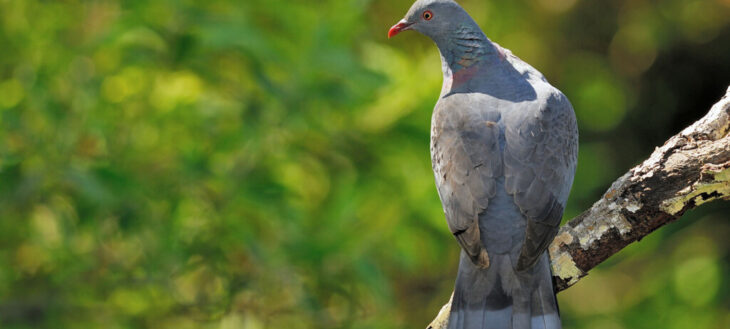
The Canary islands possess significant biodiversity, with an exceptional number of endemic species, earning the islands universal recognition.
Nearly one hundred bird species nest in the Canary Islands, six of which have the distinction of being found exclusively there: the blue chaffinch, the laurel pigeon, the Canary stonechat, the Tenerife goldcrest, and the Canary chiffchaff.
Recent studies appear to confirm that robins, especially the Gran Canaria robin, also hold this distinction. Furthermore, the plain swift, the Berthelot’s pipit, and the Canary Island swift are Macaronesian endemics, and some thirty subspecies are recognized as endemic to the Canary Islands. As for migratory birds, the number of species recorded with certainty exceeds 300.
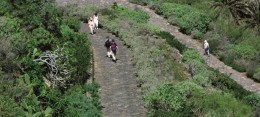
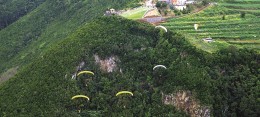
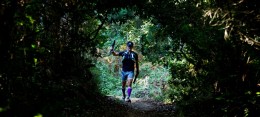
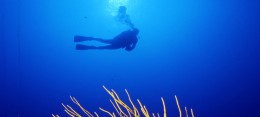
The rich diversity of ecosystems offered by the Canary Islands’ protected areas provides an attractive setting for outdoor activities. Exploring the extensive network of trails that crisscross these natural wonders is a must for any tourist or resident who wants to discover our rich biodiversity.
The municipality of Los Realejos is one of the most fortunate on the island in terms of its natural wealth, evidenced by the fact that almost 50% of its land is protected by environmental laws.
Due to its unique characteristics, Los Realejos is one of the best-protected areas in the islands, with this conservation underpinned by various legal protections at the national, regional (Canary Islands Natural Areas Law), European (Special Protection Area for Birds), and global (World Heritage Site) levels.
Among these areas, the Campeches Tigaiga and Ruiz Protected Landscape stands out for its biodiversity, also including the Barranco Ruiz Site of Scientific Interest. These areas form a single geographical and landscape unit, located west of the Orotava Valley. It is a rugged landscape of great beauty, defined by steep escarpments.
Its interior harbors a high biodiversity of endemic species, giving it significant scientific interest. The vegetation of the lower areas is characterized by the presence of rock-dwelling communities on the cliffs, along with cardonal-tabaibal scrublands. In the middle section, fayal-brezal scrub and remnants of laurisilva forest appear. In the upper section, there are plantations of Canary Island and radiata pine, while in the ravine bed, willows are the most representative tree species.
Within the protected area lies the El Terrero cliff, with escarpments that can reach great heights and constitute geomorphological units representative of significant geological processes. Amidst this rugged landscape, some remnants of thermophilic forests stand out.
In the heart of the Orotava Valley lies the Montaña de Los Frailes Natural Monument, a black or reddish-brown volcanic cone with a circular base, a striking and unique landscape feature.
The Corona Forestal Natural Park is a vast green expanse dominated by pine forests, both natural and planted. The Canary Island pine is the most representative species in this area. There are also examples of high-mountain scrubland and heathland, which harbor a large number of invertebrates, most of them endemic and of great scientific value.
Finally, Teide National Park is the finest example of a high-mountain volcanic ecosystem in Europe and boasts a spectacular landscape with unique characteristics. Its biological richness is remarkable, with over 1,400 invertebrate species, almost half of which are endemic to the Canary Islands, and 194 recorded flora species, 31 of which are endemic to the Canary Islands and 32 of which are exclusive to Tenerife.
Link to the NaturViera website